How Courier Tracking Works in the United States: The Complete Behind-the-Scenes Guide
Have you ever ordered something online and found yourself checking the tracking page five times a day?
Whether it’s an important legal document, a birthday gift, or the latest gadget you couldn’t wait to buy, tracking your shipment gives peace of mind. But most people don’t actually understand how courier tracking works in the United States.
Is it GPS? Is someone manually updating it? Why does it sometimes say “In Transit” for days?
In this detailed guide, we’ll break it all down in simple terms. By the end, you’ll understand exactly what happens behind the scenes—from label creation to final delivery—and how to solve common tracking problems like a pro.
What Is Courier Tracking and Why It Matters
Courier tracking is a digital system that allows customers and businesses to monitor the location and status of a package in real time. In the United States, major carriers like USPS, UPS, and FedEx use advanced logistics technology to provide detailed shipment updates. This system improves transparency, reduces lost packages, and builds customer trust.
Without tracking systems, eCommerce wouldn’t function at the scale it does today. Imagine Amazon without shipment updates. Chaos, right?
How Courier Tracking Works in the United States (Step-by-Step)
Let’s break this down into clear, simple steps.
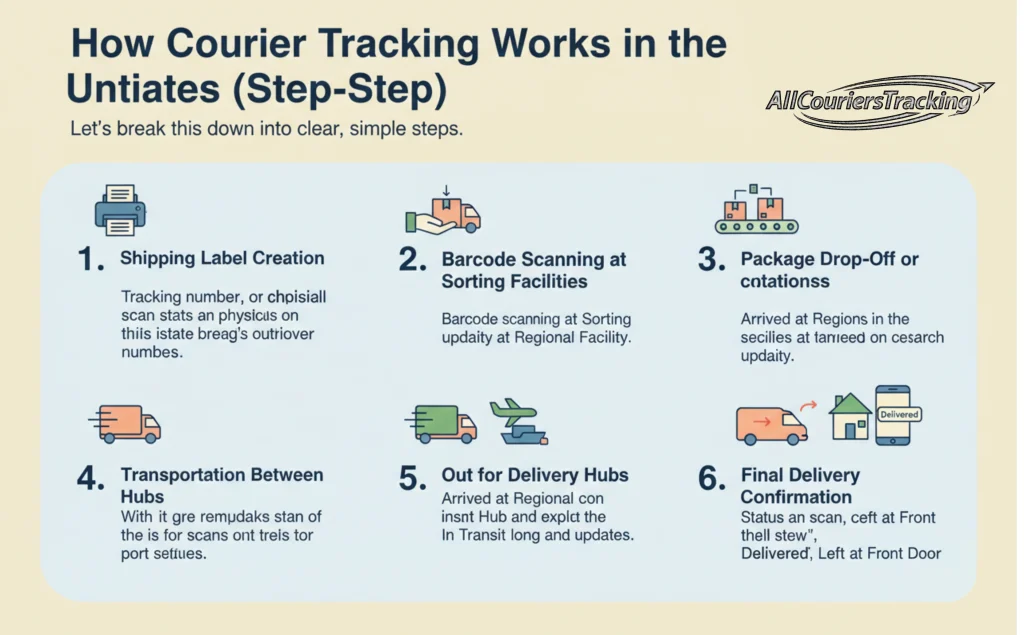
1. Shipping Label Creation
Everything starts with a shipping label.
When a seller prints a label, it generates:
- A tracking number
- A barcode or QR code
- Sender and recipient information
- Routing details
This tracking number is the key to the entire system. Once created, it enters the carrier’s database.
At this stage, tracking may show:
“Label Created” or “Shipment Information Received” That doesn’t mean the package is moving yet-it just means it exists in the system.
2. Package Drop-Off or Pickup
Once the package is physically handed over to the courier, it gets its first scan.
This scan:
- Activates the shipment
- Confirms possession by the carrier
- Updates the tracking system
Now you might see:
“Accepted at Facility”
“Picked Up”
This is the real starting point of movement.
3. Barcode Scanning at Sorting Facilities
Here’s where the magic happens.
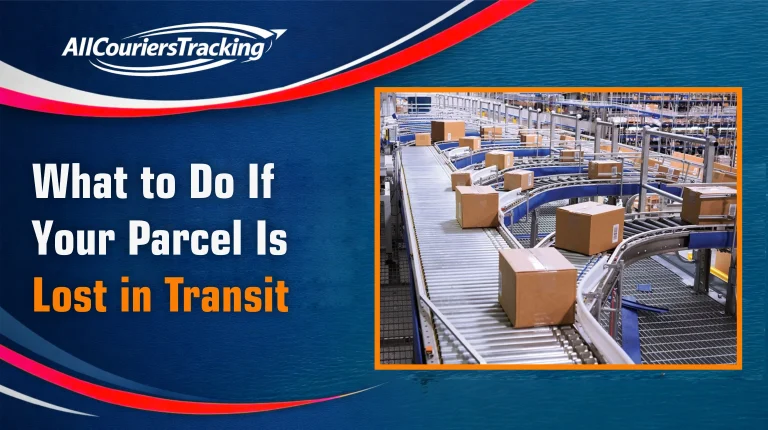
Across the country, packages travel through automated sorting centers. These facilities use:
- Conveyor belt systems
- Laser barcode scanners
- Automated routing software
Each time your package passes through a checkpoint, it’s scanned. That scan updates the tracking system.
This is why you see updates like:
- “Arrived at Regional Facility”
- “Departed Distribution Center”
- “In Transit”
Contrary to popular belief, this isn’t GPS tracking on your box. It’s checkpoint-based scanning.
4. Transportation Between Hubs
After sorting, packages move via:
- Trucks
- Airplanes
- Cargo vans
- Freight trains (occasionally)
When your tracking says “In Transit,” it usually means the package is moving between major hubs. During long-distance travel, you may not see frequent updates. That’s normal.
5. Out for Delivery
Once your package reaches the local distribution center, it’s assigned to a delivery driver.
At this point, tracking shows:
“Out for Delivery”
This is often the most exciting update. Many delivery vehicles now use handheld scanners connected to mobile networks. These devices allow real-time updates.
6. Final Delivery Confirmation
When the driver delivers your package, they scan it again. That final scan updates the system instantly.
You may see:
- “Delivered”
- “Left at Front Door”
- “Delivered to Mailbox”
- “Signature Obtained”
And just like that, the journey ends. That’s the full lifecycle of how courier tracking works in the United States-from digital creation to doorstep delivery.
Technologies Behind Courier Tracking Systems
Modern courier tracking relies on multiple technologies working together.
Barcode Technology
Barcodes store essential shipment data. Scanners read them instantly at checkpoints. This is the backbone of the entire system.
RFID (Radio Frequency Identification)
Some carriers use RFID tags for bulk shipments. These don’t require direct line-of-sight scanning like barcodes. They’re faster but more expensive.
GPS Fleet Tracking
While individual packages aren’t GPS-tracked, delivery trucks often are.
This allows companies to:
- Optimize routes
- Estimate delivery times
- Improve efficiency
Cloud-Based Logistics Software
All tracking updates are stored in centralized cloud systems. This allows customers to check shipment status from anywhere.
Common Tracking Statuses Explained
Let’s decode confusing tracking messages.
| Status | What It Actually Means |
|---|---|
| Label Created | Seller printed label but hasn’t shipped yet |
| In Transit | Package is moving between facilities |
| Arrived at Facility | Reached a sorting center |
| Out for Delivery | On truck with delivery driver |
| Delivery Exception | Delay due to issue |
| Delivered | Package has arrived |
Understanding these eliminates unnecessary stress.
Common Problems with Courier Tracking (And Solutions)
Even though how courier tracking works in the United States is highly advanced, issues still happen. Let’s solve the most common ones.
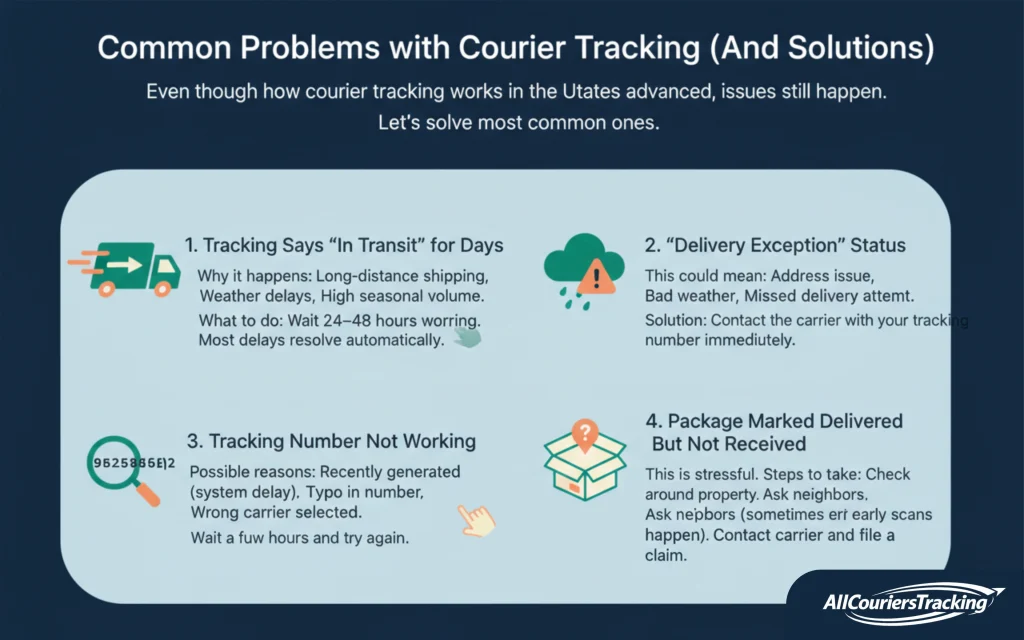
1. Tracking Says “In Transit” for Days
Why it happens:
- Long-distance shipping
- Weather delays
- High seasonal volume
What to do:
Wait 24–48 hours before worrying. Most delays resolve automatically.
2. “Delivery Exception” Status
This could mean:
- Address issue
- Bad weather
- Missed delivery attempt
Solution:
Contact the carrier with your tracking number immediately.
3. Tracking Number Not Working
Possible reasons:
- Recently generated (system delay)
- Typo in number
- Wrong carrier selected
Wait a few hours and try again.
4. Package Marked Delivered But Not Received
This is stressful.
Steps to take:
- Check around your property.
- Ask neighbors.
- Wait a few hours (sometimes early scans happen).
- Contact carrier and file a claim.
Real-Life Example: Why Tracking Matters
Imagine Sarah, who runs a small online jewelry store in Texas. One customer orders a $500 necklace. The tracking suddenly stops updating for two days. The customer panics.
But Sarah understands how courier tracking works in the United States. She knows “In Transit” doesn’t mean lost—it just means between hubs. Sure enough, the package updates and arrives on time. Knowledge reduces panic.
Expert Tips for Smarter Shipment Tracking
Here are insider tips most people don’t know:
✔ Sign Up for Text Alerts
Most carriers offer SMS notifications.
✔ Double-Check Your Address
Small typos cause major delays.
✔ Ship Early During Holidays
Peak seasons slow everything down.
✔ Keep Tracking Numbers Saved
Take screenshots for reference.
✔ Understand Transit Times
Ground shipping takes longer than express.
Mistakes to Avoid
Many people misunderstand how courier tracking works in the United States, which leads to unnecessary stress.
Avoid these mistakes:
- Checking tracking every hour
- Assuming “In Transit” means stuck
- Ignoring delivery attempt notices
- Using incorrect tracking websites
- Waiting too long to report lost shipments
Stay proactive, not reactive.
How Accurate Is Courier Tracking?
In general, tracking systems are extremely accurate.
However, they depend on:
- Proper scanning
- Functional equipment
- Network connectivity
- Human handling
While rare, missed scans do happen.
If updates stop completely for several days, contact customer support.
Future of Courier Tracking in America
The logistics industry is evolving rapidly.
Future developments include:
- Real-time GPS package tracking
- Drone deliveries
- AI-powered route optimization
- Smart lockers with instant verification
As technology advances, tracking will become even more precise and transparent.
FAQs
Is courier tracking real-time?
Not exactly. It updates at scanning checkpoints, not continuously via GPS.
Why does tracking sometimes skip locations?
If a scan is missed, the system jumps to the next successful checkpoint.
Can two packages have the same tracking number?
No. Each tracking number is unique.
How long should I wait before reporting a lost package?
Usually 48-72 hours after the expected delivery date.
Why does my package move away from my state?
Packages are routed through central hubs for sorting efficiency.
Does “Out for Delivery” guarantee same-day arrival?
Most of the time, yes-but rare delays can still occur.
Final Thoughts
Understanding how courier tracking works in the United States changes the way you view shipping updates.