AI-Powered Package Tracking Systems || The Future of Smart Logistics
In today’s fast-paced digital world, customers expect real-time updates, faster deliveries, and complete transparency when it comes to their shipments. Traditional tracking systems, which once relied on simple status updates, are no longer enough to meet these expectations. This is where AI-powered package tracking systems come into play.
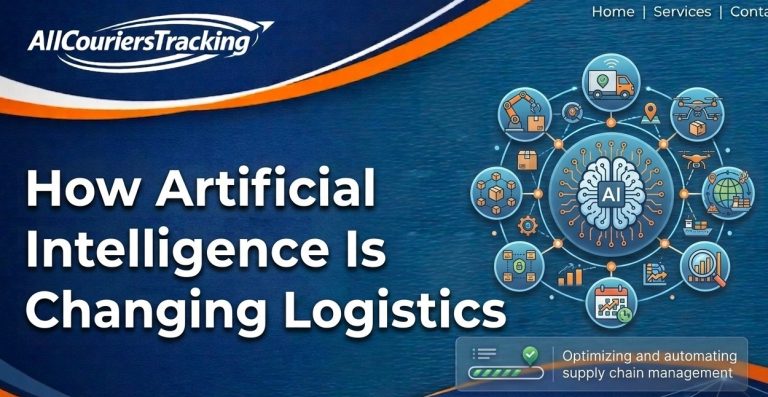
Artificial Intelligence (AI) is revolutionizing the way packages are tracked, monitored, and delivered. By combining machine learning, predictive analytics, and real-time data processing, AI-powered tracking systems are transforming logistics into a smarter, more efficient, and customer-centric industry.
In this detailed guide, we’ll explore how AI-powered package tracking systems work, their key features, benefits, real-world applications, challenges, and what the future holds.
What Are AI-Powered Package Tracking Systems?
AI-powered package tracking systems are advanced tracking solutions that use artificial intelligence to monitor shipments in real time, predict delivery times, detect issues, and optimize logistics operations.
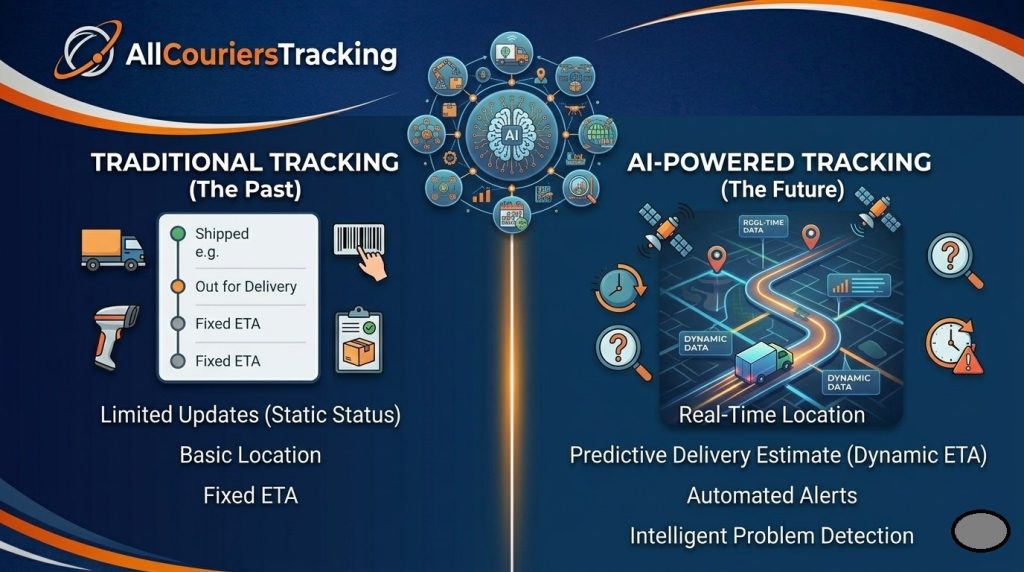
Unlike traditional tracking systems that provide limited updates (e.g., “shipped” or “out for delivery”), AI-based systems offer:
- Real-time location tracking
- Predictive delivery estimates
- Automated alerts and notifications
- Intelligent problem detection
These systems continuously learn from data, improving their accuracy and efficiency over time.
How AI Enhances Package Tracking
AI transforms package tracking by analyzing massive amounts of data from multiple sources, including:
- GPS devices
- IoT sensors
- Traffic and weather data
- Historical delivery records
Using this data, AI systems can make smart decisions and provide insights that were previously impossible.
Key Features of AI-Powered Tracking Systems
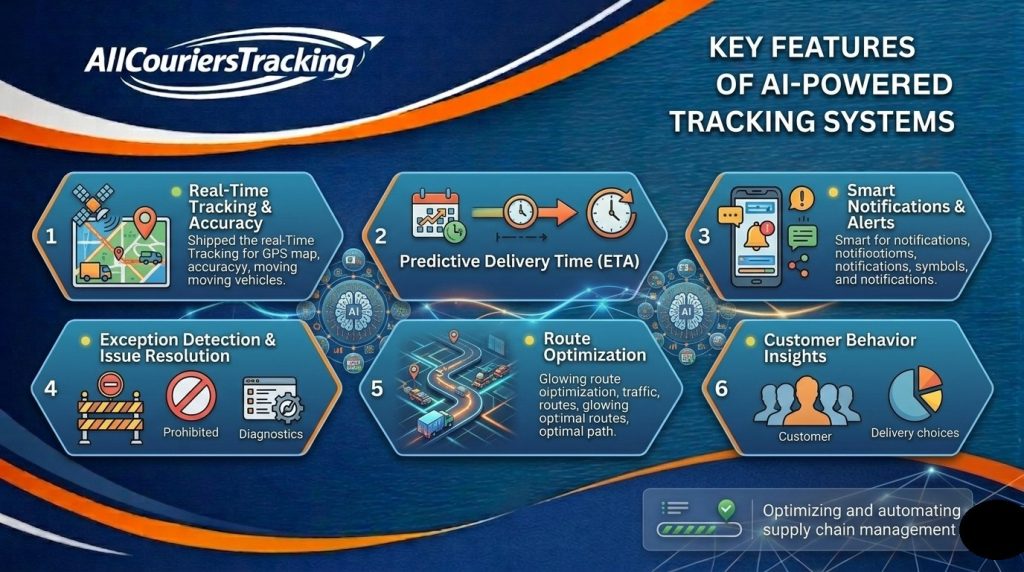
Real-Time Tracking with High Accuracy
AI enables precise real-time tracking of packages. By integrating GPS and IoT technologies, businesses and customers can see exactly where a package is at any moment.
This level of transparency builds trust and reduces customer anxiety about delivery status.
Predictive Delivery Time (ETA)
One of the most powerful features of AI is predictive analytics. AI systems calculate estimated delivery times based on:
- Traffic conditions
- Weather forecasts
- Delivery routes
- Historical performance
Unlike static ETAs, AI-powered predictions are dynamic and update in real time.
Smart Notifications and Alerts
AI systems automatically notify customers about:
- Shipment progress
- Expected delivery time
- Delays or disruptions
These alerts can be sent via SMS, email, or mobile apps, keeping customers informed at every stage.
Exception Detection and Issue Resolution
AI can identify potential problems before they occur, such as:
- Delays due to traffic or weather
- Route inefficiencies
- Lost or misplaced packages
By detecting these issues early, logistics companies can take corrective action quickly.
Route Optimization
AI continuously analyzes delivery routes and suggests the most efficient paths. This reduces delivery time and fuel costs while improving overall efficiency.
Customer Behavior Insights
AI systems analyze customer preferences and behaviors to:
- Offer flexible delivery options
- Predict preferred delivery times
- Improve customer satisfaction
Technologies Behind AI Tracking Systems
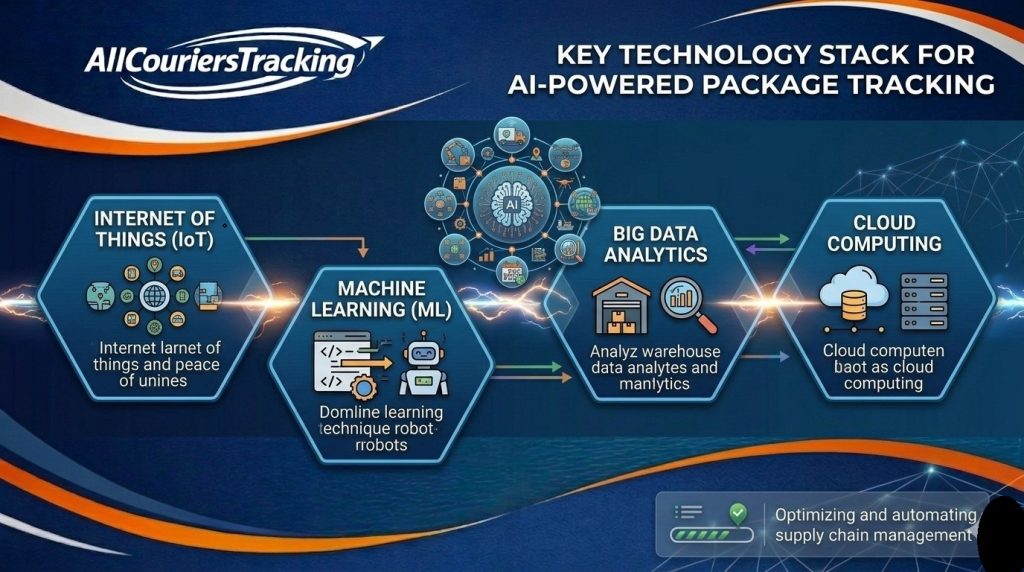
AI-powered tracking systems rely on several advanced technologies:
Machine Learning (ML)
Machine learning algorithms analyze historical data and improve predictions over time.
Internet of Things (IoT)
IoT devices such as GPS trackers and sensors provide real-time data about package location and condition.
Big Data Analytics
AI processes large datasets to identify patterns and trends.
Cloud Computing
Cloud platforms store and process data, enabling real-time access and scalability.
Computer Vision
In warehouses, AI-powered cameras track packages and verify shipments.
Benefits of AI-Powered Package Tracking Systems
1. Improved Customer Experience
Customers receive accurate updates, real-time tracking, and timely notifications, leading to higher satisfaction.
2. Increased Operational Efficiency
AI automates tracking processes and reduces manual work, allowing companies to focus on strategic tasks.
3. Reduced Costs
Optimized routes, fewer delays, and efficient resource management help reduce operational costs.
4. Enhanced Transparency
Both businesses and customers have full visibility into the supply chain.
5. Better Decision-Making
AI provides actionable insights that help businesses make informed decisions.
6. Reduced Delivery Failures
Predictive analytics minimizes failed delivery attempts by improving planning and coordination.
Real-World Applications
AI-powered tracking systems are widely used across various industries:
E-Commerce
Online retailers use AI tracking to provide real-time updates and accurate delivery estimates.
Courier Services
Courier companies rely on AI for route optimization and shipment monitoring.
Freight and Shipping
Large-scale logistics operations use AI to track containers and manage global supply chains.
Healthcare Logistics
AI ensures timely delivery of medical supplies and temperature-sensitive products.
AI in Last-Mile Delivery Tracking
The last mile is the most critical stage of delivery. AI enhances last-mile tracking by:
- Providing real-time driver location
- Offering accurate delivery windows
- Enabling contactless delivery updates
Customers can track their package down to the final minutes before arrival.
Challenges of AI-Powered Tracking Systems
Despite its advantages, AI implementation comes with challenges:
High Implementation Costs
Developing and deploying AI systems can be expensive, especially for small businesses.
Data Privacy Concerns
Handling customer and shipment data raises privacy and security issues.
Integration with Legacy Systems
Many companies still use outdated systems, making integration complex.
Dependence on Data Quality
AI accuracy depends on the quality of data. Poor data can lead to incorrect predictions.
Technical Expertise
Businesses need skilled professionals to manage AI systems.
Future Trends in AI Package Tracking
1. Autonomous Delivery Systems
Self-driving vehicles and drones will further enhance tracking and delivery efficiency.
2. Blockchain Integration
Combining AI with blockchain will improve transparency and security.
3. Hyper-Accurate Predictions
AI will provide near-perfect delivery time estimates.
4. Voice and Chatbot Integration
Customers will track packages using voice assistants and AI chatbots.
5. Sustainable Logistics
AI will help reduce carbon emissions by optimizing routes and minimizing waste.
How Businesses Can Implement AI Tracking Systems
If you’re planning to adopt AI-powered tracking, consider these steps:
Start with Clear Goals
Identify what you want to achieve, such as faster delivery or better customer experience.
Invest in Data Infrastructure
Ensure your data is accurate, organized, and accessible.
Choose Scalable Solutions
Select AI tools that can grow with your business.
Train Your Team
Equip employees with the skills needed to use AI effectively.
Monitor Performance
Continuously analyze results and improve your system.
Why AI Tracking Is Essential for Modern Businesses
In a competitive market, customer expectations are higher than ever. Businesses that fail to provide real-time tracking and accurate delivery updates risk losing customers.
AI-powered tracking systems offer a competitive advantage by:
- Enhancing customer trust
- Improving operational efficiency
- Reducing costs
- Increasing delivery speed
Companies that adopt AI early are more likely to succeed in the evolving logistics landscape.
Conclusion
AI-powered package tracking systems are transforming the logistics industry by making it smarter, faster, and more reliable. With real-time tracking, predictive analytics, and intelligent automation, businesses can deliver better services while reducing costs and improving efficiency.
Although there are challenges in implementation, the long-term benefits make AI a valuable investment for any logistics operation.
As technology continues to evolve, AI will play an even greater role in shaping the future of package tracking. Businesses that embrace this transformation today will be well-positioned to lead tomorrow’s logistics industry.